

5 Simple B2B Examples That Align to the Modern Buying Journey – Plus How to Measure Impact
Let’s be honest: most B2B teams think they’re doing marketing—but what they’re really doing is publishing content, hosting a webinar, and hoping it somehow moves the needle.
In today’s buying journey, where over 70% of the decision happens before someone ever talks to sales, “good marketing” isn’t about pushing messages or showing up louder than the competition. It’s about showing up smarter—in the right place, with the right message, for the right buyer stage.
And no, it doesn’t need to be complicated. Or expensive. Or require a full-time team of content scientists and CRM wizards.
In this guide, we’ll walk through 5 real-world examples of marketing that works for modern B2B buyers—with clear reasons why it works and ways to measure it even if your team’s not fully aligned (yet).
What Makes Marketing “Good” in B2B Today?
Let’s set the bar:
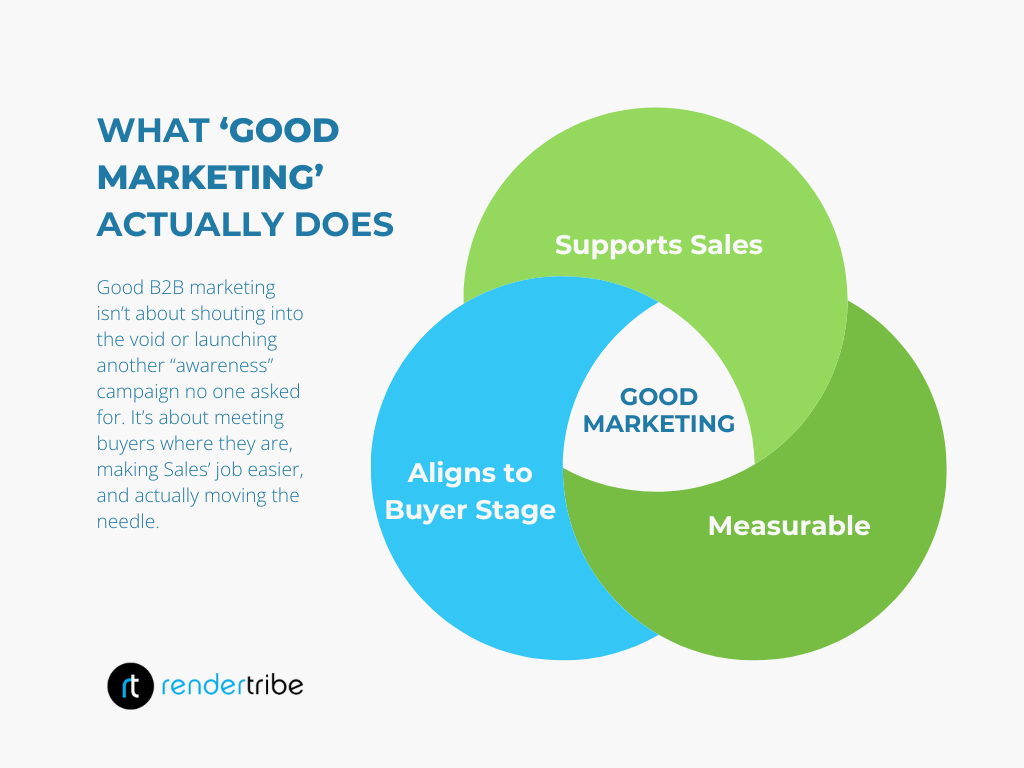
- It’s aligned to the buyer journey. Not just “awareness,” but actual consideration, evaluation, and consensus-building stages.
- It helps Sales have better conversations. Real marketing clears the path for Sales—it doesn’t just fill the pipeline with noise.
- It’s measurable (even if it’s scrappy). Good marketing can be tied to outcomes—even if you’re still stuck using spreadsheets.
5 Examples of “Good Marketing” in the Wild (and Why They Work)
1. The Pre-Sales FAQ PDF
A downloadable resource that answers the “awkward” questions Sales usually gets on the second or third call.
Why it works: Buyers are doing independent research. This doc shortens the sales cycle by getting ahead of objections.
Measure it with:
- of downloads / opens
- % of deals that close faster after receiving it
- Sales team feedback: “Are people asking fewer of the same questions?”
2. A One-Topic Webinar Series (Not a Lead Gen Gimmick)
30-min expert-led discussions focused on solving a common, specific customer problem—not pitching.
Why it works: Builds trust and familiarity. Educates without selling. Signals authority.
Measure it with:
- % of attendees that match ICP
- Follow-up meetings booked post-event
- Sales engagement after the event
3. Industry-Specific Landing Pages
Customized pages that speak directly to the pain points of key verticals (e.g., Manufacturing, Financial Services, etc.)
Why it works: Personalization builds relevance. Even small tweaks in language can dramatically improve engagement.
Measure it with:
- Bounce rate and time on page
- Conversion rate vs. generic pages
- Sales lift from segmented outreach
4. A Quarterly Insights Email from Your Founder or CEO
Not a newsletter. Just a raw, honest POV from leadership on something meaningful to your customers.
Why it works: People buy from people. This creates affinity, credibility, and approachability.
Measure it with:
- Open and reply rates (especially from key accounts)
- Direct responses or forwards to team members
- Pipeline movement post-send
5. The “Not All Leads Are Created Equal” Campaign
A simple scoring system rolled into an email or internal doc showing how to prioritize leads based on fit + behavior.
Why it works: Helps both Marketing and Sales stop chasing every inbound name and start focusing on high-propensity opportunities.
Measure it with:
- Time spent on low-fit leads (before/after)
- Meetings booked from “A leads” vs. “C leads”
- Alignment score from both teams (quick post-mortem surveys)
“How to Measure It” Matrix:
| Tactic | What to Track | Why It Matters |
| Pre-Sales FAQ | # of downloads, Sales cycle length | Speeds up decisions |
| Webinar | ICP % of attendees, booked meetings | Signals real interest |
| Landing Pages | Bounce rate, Conversion | Shows relevance |
| CEO Email | Opens, Replies, Forwards | Indicates trust + timing |
| Lead Scoring | Time spent per lead tier | Improves focus |
You Don’t Need Flashy. You Need Useful.
Most B2B teams aren’t struggling because they don’t have enough tactics—they’re struggling because they don’t have a clear throughline between what Marketing does and how it impacts pipeline.
The five examples above are easy to implement, easy to measure, and (most importantly) easy to align around. Use this guide to start meaningful conversations with your team—not about what you could be doing, but what you should be doing to move the needle.
Want to talk it through with someone who’s been in the weeds? Book a no-pitch, no-BS strategy call—we’ll help you get your arms around what’s working, what’s not, and what’s next.
