

Businesses are always seeking the most effective way to drive revenue. While many companies have embraced product-led growth (PLG) in recent years, the sales-led go-to-market (GTM) strategy is experiencing a resurgence. With its focus on personalized, high-touch engagement, a sales-led strategy puts the sales team in the driver’s seat, ensuring direct connections with prospects throughout the entire buyer’s journey.
For revenue leaders, it’s critical to understand how a sales-led approach fits into the broader GTM ecosystem. A well-executed sales-led strategy can accelerate growth, build stronger customer relationships, and increase pipeline predictability. But what exactly does a sales-led GTM strategy look like, and how do you know if it’s the right fit for your organization?
In this blog, we’ll explore what a sales-led GTM strategy entails, why it’s effective for complex B2B sales environments, and how to implement it successfully within your business. Whether you’re rethinking your current strategy or looking to boost sales performance, this guide will help you explore the key elements of a sales-led approach and its potential to drive sustainable growth.
[Get your Sales-Led GTM Readiness Workbook]

What Is a Sales-Led GTM Strategy?
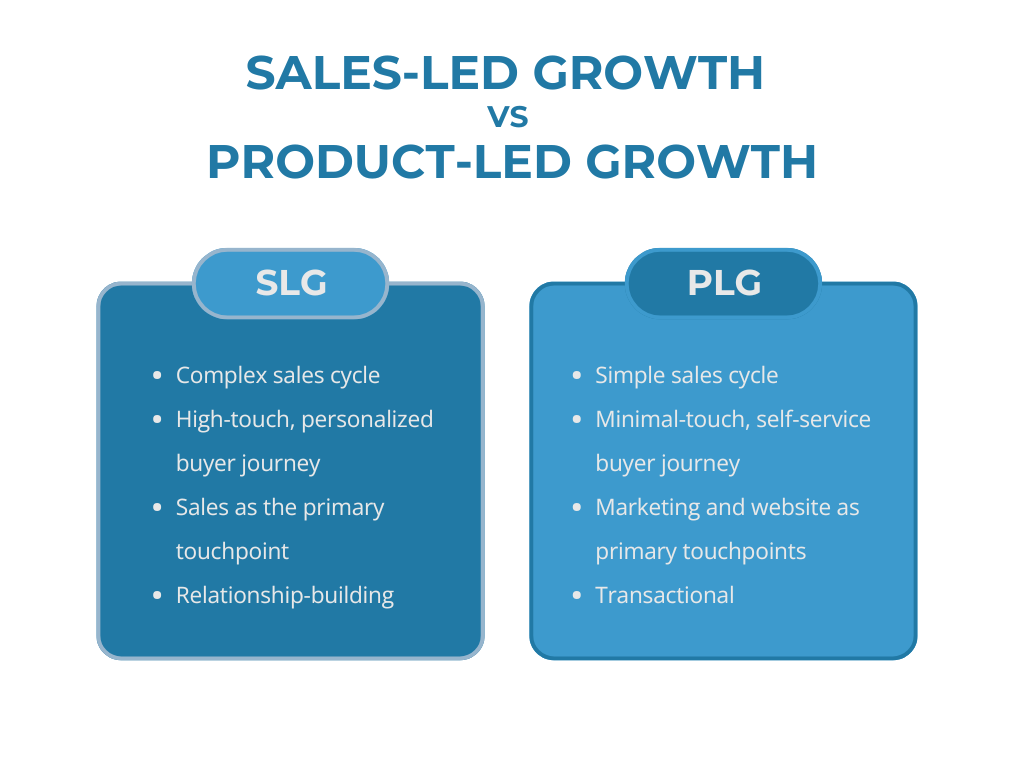
At its core, a sales-led go-to-market (GTM) strategy places the sales team at the forefront of driving revenue, engaging directly with prospects, and owning the customer journey from initial outreach to deal closure. Unlike product-led strategies, where the product serves as the primary growth engine or marketing-led approaches that rely heavily on broad-reaching campaigns, a sales-led strategy emphasizes the importance of personal interaction and relationship-building as key drivers of growth.
In a sales-led model, the sales team takes center stage, leveraging their expertise and interpersonal skills to guide prospects through the buying process. This strategy thrives in B2B environments where purchases are often complex, involve multiple decision-makers, and require deeper conversations to uncover the true pain points and needs of the customer. The sales team becomes more than just a transactional player—they serve as trusted advisors, building credibility and offering tailored solutions that speak directly to the customer’s challenges.
Key Characteristics of a Sales-Led GTM Strategy:
- High-Touch, Personalized Buyer Journeys: Every interaction is tailored to the specific needs and priorities of the prospect, fostering deeper engagement and trust. Sales teams work closely with potential buyers to provide relevant insights and recommendations, making the process more consultative.
- Sales as the Primary Touchpoint: Sales teams are involved from the earliest stages of the buying journey, often reaching out proactively to engage with prospects. They guide leads through each phase, from initial interest to final purchase, ensuring a cohesive and consistent experience.
- Focus on Relationships Over Transactions: In a sales-led model, success is measured by long-term relationships and customer retention, not just short-term wins. Sales teams prioritize building a rapport with prospects, understanding their business needs, and positioning themselves as long-term partners.
- Strategic Use of Data and Technology: While the human element is central, sales-led strategies also rely on tools like customer relationship management (CRM) systems, sales automation platforms, and data analytics to enhance efficiency and personalize outreach at scale.
 Common Misconceptions:
A sales-led GTM strategy can often be misunderstood, particularly when compared to its product-led and marketing-led counterparts. One of the most common misconceptions is that a sales-led approach excludes marketing involvement or downplays the role of product innovation. In reality, successful sales-led strategies thrive on close alignment with marketing efforts. Marketing teams are vital in generating demand, building brand awareness, and providing the content and messaging that fuel effective sales conversations. Similarly, a strong product is essential, as sales teams rely on its features and benefits to close deals.
Another misconception is that sales-led models are only for enterprise-level businesses or large-ticket sales. While it’s true that this strategy works particularly well in industries with longer sales cycles and complex decision-making processes, businesses of all sizes can benefit from a more human-centered, relationship-focused approach to selling. Even in smaller deals, a personalized sales-led experience can differentiate a company in a crowded marketplace.
At the end of the day, a sales-led GTM strategy is about creating meaningful, one-on-one interactions that lead to stronger customer relationships and, ultimately, more predictable revenue. With sales teams playing a pivotal role in shaping the buyer’s journey, businesses can ensure that prospects receive the tailored support and insights they need to make confident purchasing decisions.
When Is a Sales-Led Strategy the Right Choice?
Adopting a sales-led go-to-market (GTM) strategy can be a game changer for revenue leaders navigating complex B2B sales environments. While PLG has its strengths, a sales-led approach offers distinct advantages, especially when it comes to fostering relationships, managing long sales cycles, and driving higher-value deals.
Let’s break down why more organizations are gravitating towards a sales-led GTM strategy and the unique benefits it brings.
1. High-Touch Approach for Complex Sales
In B2B markets, purchases are rarely simple. Buyers often face intricate challenges that require tailored solutions, and decision-making processes can involve multiple stakeholders across departments. A sales-led strategy shines in this environment by providing a more hands-on, personalized approach to prospecting and closing deals.
Unlike automated or self-serve models, where buyers must often navigate product features and benefits on their own, a sales-led model offers a deeper level of guidance. Sales professionals act as consultants, working closely with prospects to diagnose their needs and present customized solutions. This level of interaction not only accelerates the sales process but also helps establish a stronger connection between the buyer and seller—one that is built on trust, not just transactional value.
For organizations with longer sales cycles, this personal touch can make all the difference. Sales teams have the opportunity to nurture relationships over time, ensuring that prospects feel supported and informed throughout every stage of the buying journey. This is particularly important for complex solutions, where buyers may need more education and reassurance before making a commitment.
2. Greater Control Over the Pipeline
One of the key advantages of a sales-led GTM strategy is the increased control it gives sales teams over the pipeline. In a PLG model, sales often relies on the influx of leads generated by external campaigns or user-driven product engagement. But with a sales-led approach, the team is more proactive in driving pipeline growth and managing deal progression.
Sales teams can prioritize prospects based on engagement levels, intent signals, and fit, ensuring that their efforts are focused on the most promising opportunities. This hands-on approach allows for better qualification of leads, as sales professionals are able to ask the right questions early in the process, helping to identify whether a prospect is a good fit or if they need more nurturing.
Moreover, by taking a more active role in the sales process, teams can better forecast and predict revenue outcomes. With direct involvement in lead generation and nurturing, sales teams have clearer visibility into the likelihood of deal closures and can adjust strategies in real-time to keep the pipeline healthy.
3. Increased Trust and Relationship Building
In today’s B2B environment, buyers are more discerning and often require more than just a product demo or marketing pitch to make a decision. They want to work with someone they trust—someone who understands their challenges and can offer relevant, credible solutions. This is where a sales-led approach excels.
By building personal connections with prospects, sales professionals can create lasting relationships that transcend the initial sale. Instead of being perceived as a transactional vendor, sales reps become trusted advisors who are invested in the success of the customer. This trust not only helps in closing deals but also leads to higher levels of customer satisfaction and loyalty post-sale.
In a sales-led model, the buyer’s confidence in the sales rep can influence the speed and size of the deal. When buyers feel supported and understood, they are more likely to expedite the decision-making process and, in some cases, opt for larger, more comprehensive solutions.
4. Adaptability and Real-Time Feedback
Sales-led strategies offer a distinct advantage when it comes to adaptability. Because sales teams are in direct contact with prospects, they receive immediate feedback on everything from messaging and product fit to objections and competitive pressure. This real-time insight allows companies to pivot quickly, adjusting tactics or even product offerings to better meet the needs of the market.
For revenue leaders, this is invaluable. You don’t have to wait for quarterly reports or customer surveys to understand what’s resonating and what’s not—your sales team is on the front lines, gathering actionable data that can be fed back into your overall GTM strategy.
Sales-led organizations can quickly respond to changes in the market, whether it’s shifting buyer priorities, economic challenges, or new competitive threats. This agility helps ensure that your business remains aligned with the needs of your prospects and customers, keeping you ahead of the curve.
5. Closing High-Value Deals
For companies focused on enterprise-level sales or high-ticket items, a sales-led strategy is particularly effective. These deals typically require more in-depth discussions, negotiations, and customizations, which are best handled by a knowledgeable and well-equipped sales team.
In these scenarios, the sales-led approach enables deeper, more strategic conversations with prospects. Sales reps can engage decision-makers at different levels of the organization, understanding the broader business objectives and tailoring their proposals to meet those needs. This not only improves the chances of closing larger deals but also ensures that the solutions provided deliver real, measurable value.
How to Implement a Sales-Led GTM Strategy
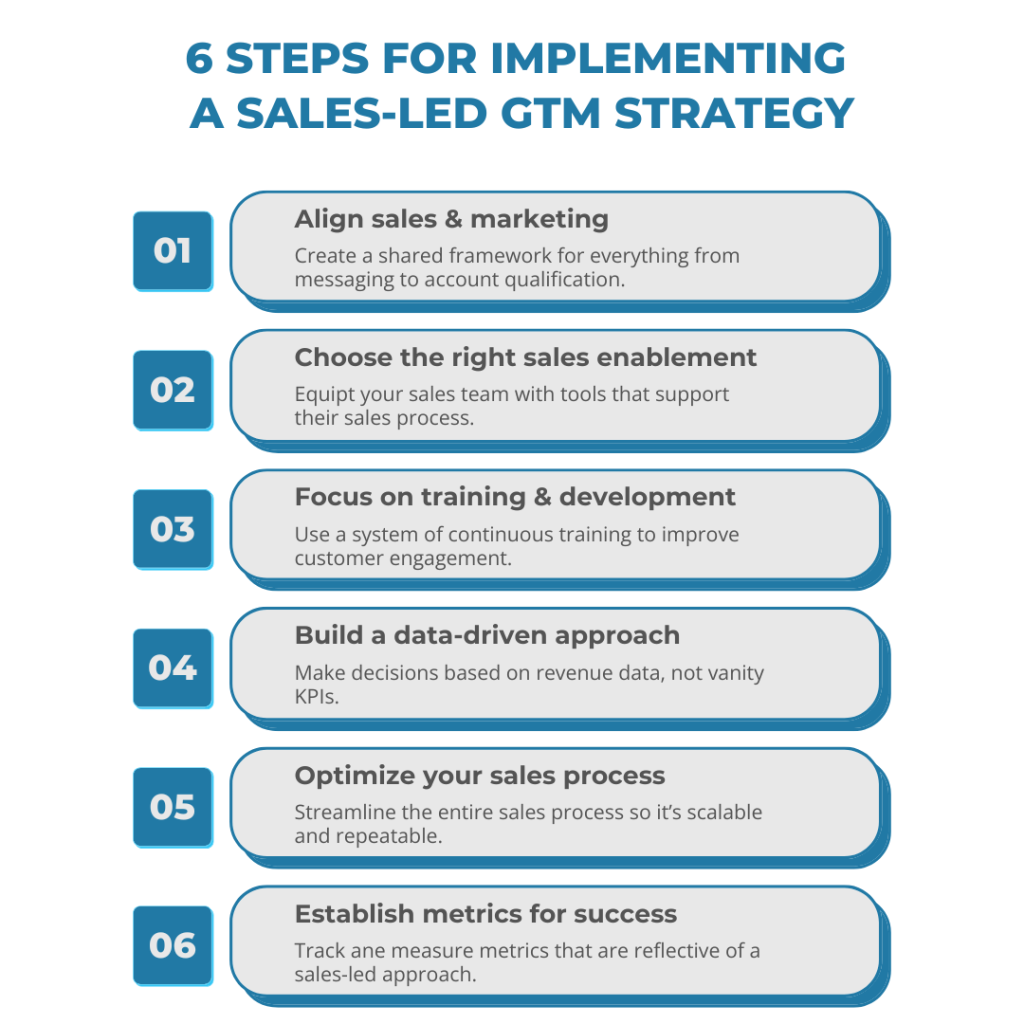
Step 1: Align Sales and Marketing
- Discuss the importance of alignment and collaboration between sales and marketing to ensure consistent messaging and support.
- Create a shared framework for handoffs, account qualification, and nurturing.
Step 2: Invest in Sales Enablement Tools
- Equip sales teams with accessible CRM systems, customer insights, and enablement tools to streamline outreach and personalization.
Step 3: Focus on Training and Development
- Provide continuous training for sales reps on consultative selling, account-based marketing (ABM), and customer engagement strategies.
Step 4: Build a Data-Driven Approach
- Use data and analytics to track pipeline performance, conversion rates, and customer behavior.
- Make decisions based on revenue data, improving forecasting and resource allocation.
Step 5: Optimize your Sales Process
- Streamline and map out the entire sales journey, from outreach to deal closure, ensuring it’s scalable and repeatable.
Step 6: Establish Metrics for Success
- Identify key performance metrics for the sales-led GTM strategy, such as engaged accounts, qualified sales conversations, close rates, sales cycle length, and customer lifetime value.
 Is a Sales-Led GTM Strategy Right for Your Business?
A sales-led GTM strategy offers numerous advantages, especially for B2B companies operating in complex sales environments where relationships and tailored solutions are key. By prioritizing personalized, high-touch interactions, sales teams can build trust, accelerate sales cycles, and gain greater control over pipeline performance. This approach allows businesses to better meet the needs of their prospects and customers while adapting quickly to market changes.
However, a sales-led strategy isn’t the right fit for every business. To determine if it aligns with your organization’s goals, you’ll need to assess a few critical factors:
- Sales Cycle: If your business typically deals with long, complex sales cycles that require multiple touchpoints and stakeholder engagement, a sales-led strategy could help shorten the path to closing deals. On the other hand, if your sales process is more transactional and lower-touch, a product-led or marketing-led approach might be more effective.
- Team Strength: Consider the skill set and experience of your sales team. A successful sales-led strategy relies heavily on the abilities of your sales professionals to build relationships, understand customer needs, and deliver consultative value. If your team is equipped to handle these responsibilities, they can thrive in a sales-led environment.
- Market Needs: Finally, think about your target audience. Are they looking for tailored solutions, or do they prefer to explore products independently? If your buyers need guidance throughout the sales process, especially for high-value or complex purchases, a sales-led strategy can provide the personalized support they expect.
Ultimately, choosing a sales-led GTM strategy requires careful consideration of your sales model, team dynamics, and market demands. For many B2B organizations, this approach offers a path to sustainable growth by fostering stronger relationships and creating more predictable revenue outcomes.
Tackling Sales-Led Growth in 2025
Ready to explore how a sales-led strategy could work for your business? Get a copy of our Sales-Led GTM Readiness Workbook to assess your current approach and discover whether a sales-led model is the right fit for you. Alternatively, contact us to discuss how we can help you implement a winning sales-led strategy tailored to your needs.
